Why do we love
to be scared?
I study horror, recreational fear, and the stories that captivate us — from haunted houses to Stephen King.
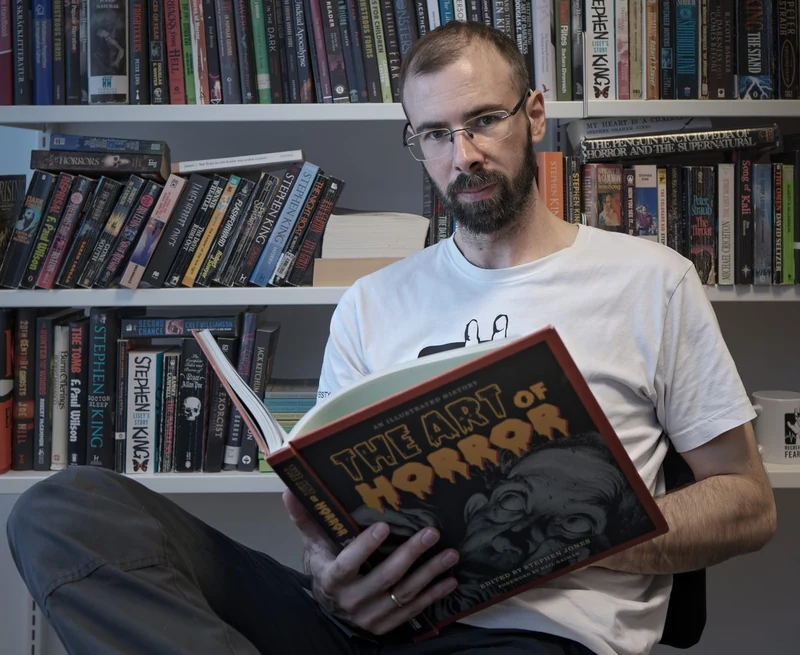
Featured in The New York Times, NPR, the BBC, National Geographic, The Washington Post, and TIME.
Recently
The pleasures of fear, on NPR
Read the featureCarving Stories at Their Natural Joints
Read the paperAbout
Exploring the appeal
of the frightening
My work brings literary scholarship together with cognitive and evolutionary psychology and the empirical study of fear. I’m interested in why people seek out frightening entertainment, how scary stories work, and what they reveal about the human mind.
I’ve authored and co-authored more than 60 peer-reviewed publications on horror, recreational fear, and the psychology of fiction.
I’m the author of Why Horror Seduces and A Very Nervous Person’s Guide to Horror Movies, both published by Oxford University Press, as well as Danish books on horror and monsters. I have also edited and co-edited collections on horror fiction, film, and imaginative culture. I co-edit the book series Cognitive Studies in Literature and Performance and serve on the editorial board of the Horror Studies book series at the University of Wales Press.
I also contribute essays to Lividian Publications’ limited editions of Joe Hill’s books and to its Robert McCammon Library.
Current workI’m currently writing about Stephen King’s enduring appeal, supported by a generous grant from the Carlsberg Foundation.
Research
Fear, fiction &
the human mind
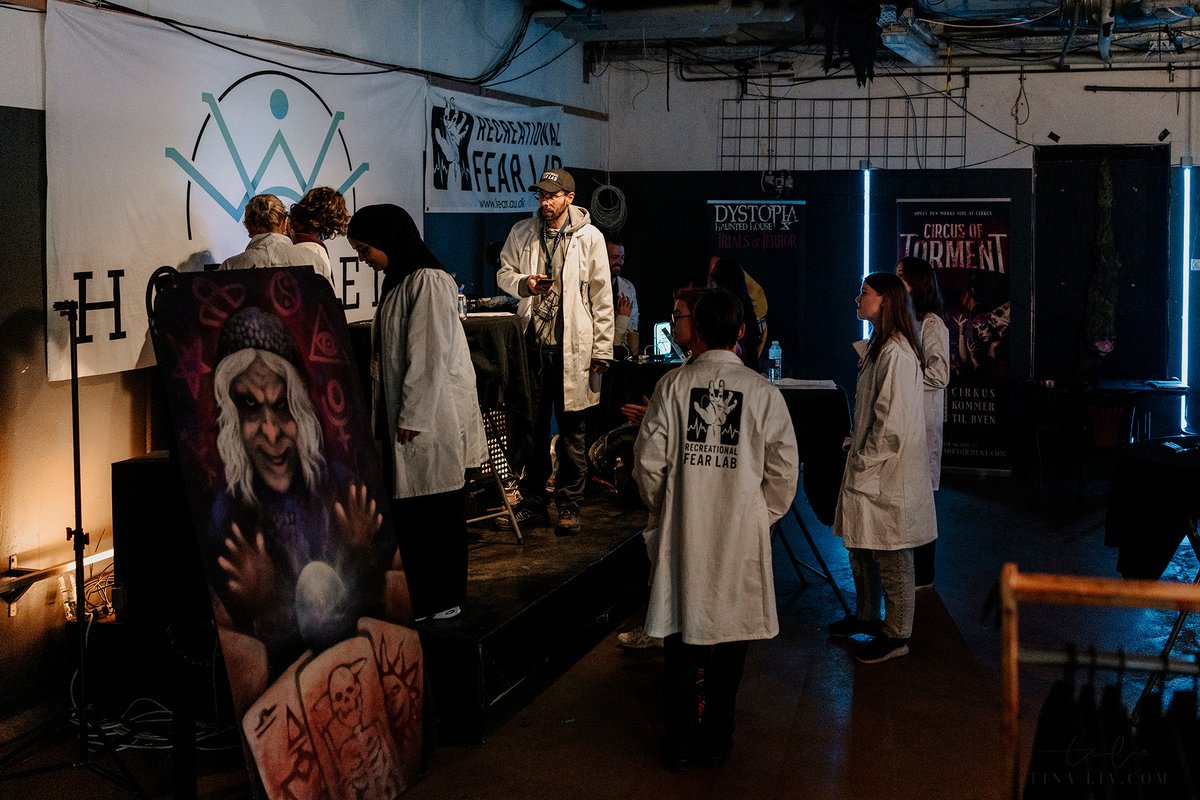
From stories to real-world scares.
At the Recreational Fear Lab, which I co-direct with Marc Malmdorf Andersen at Aarhus University, we combine fieldwork, physiological measurements, and psychological research to investigate what happens when people choose to be afraid. Collaborative projects include studies led by Marc on a sweet spot of fear and by Coltan Scrivner on horror fandom and psychological resilience during COVID-19.
My wider research connects literary scholarship with cognitive and evolutionary psychology to explore how stories engage the mind—from classic vampire fiction to Stephen King. Some studies also draw on digital humanities tools. I have long sought to develop a biocultural theory of horror, connecting evolved fears with cultural expression. This includes research with Jens Kjeldgaard-Christiansen and John A. Johnson on how horror might let us rehearse danger in the imagination.
Selected publications (24)
Scared Together: Heart Rate Synchrony and Social Closeness in a High-Intensity Horror Setting
Emotion · 2026 · Andersen et al.
The evolutionary functions of imaginative-narrative simulation and how they may contribute to psychological well-being
Evolutionary Behavioral Sciences · 2026 · van Mulukom & Clasen
Affective forecasting during a horror attraction: Insights into Intolerance of Uncertainty
Journal of Anxiety Disorders · 2025 · FitzGibbon et al.
Recreational Fear Across Childhood: A Cross-Sectional Study of Scary Activities That Children Enjoy
Child Psychiatry & Human Development · 2025 · Taranu et al.
Unraveling the Effect of Recreational Fear on Inflammation: A Prospective Cohort Field Study
Brain, Behavior, and Immunity · 2025 · Bønnelykke-Behrndtz et al.
First They Scream, Then They Laugh: The Cognitive Intersections of Humor and Fear
Evolutionary Psychology · 2024 · Hye-Knudsen et al.
The Psychological Benefits of Scary Play in Three Types of Horror Fans
Journal of Media Psychology · 2023 · Scrivner et al.
How Stephen King Writes and Why: Language, Immersion, Emotion
Orbis Litterarum · 2023 · Hye-Knudsen et al.
Creepiness and the Uncanny
Style · 2023 · Kjeldgaard-Christiansen & Clasen
Work Hard, Scare Hard? An Investigation of How Mental Workload Impacts Jump Scare Intensity
Proceedings of the ACM on Human-Computer Interaction · 2023 · Terkildsen et al.
Evil Voices in Popular Fictions: The Case of The Exorcist
Journal of Popular Culture · 2023 · Kjeldgaard-Christiansen et al.
Super-natural fears
Neuroscience & Biobehavioral Reviews · 2021 · Coelho et al.
Pandemic Practice: Horror Fans and Morbidly Curious Individuals Are More Psychologically Resilient During the COVID-19 Pandemic
Personality and Individual Differences · 2021 · Scrivner, Johnson, Kjeldgaard-Christiansen & Clasen
Playing With Fear: A Field Study in Recreational Horror
Psychological Science · 2020 · Andersen, Schjoedt, Price, Rosas, Scrivner & Clasen
Horror, Personality, and Threat Simulation: A Survey on the Psychology of Scary Media
Evolutionary Behavioral Sciences · 2020 · Clasen, Kjeldgaard-Christiansen & Johnson
Why the World Is a Better Place with Stephen King in It: An Evolutionary Perspective
Evolutionary Perspectives on Imaginative Culture · Chapter · 2020 · Clasen
Imagining the End of the World: A Biocultural Analysis of Post-Apocalyptic Fiction
Evolution and Popular Narrative · Chapter · 2019 · Clasen
Evolution and slasher films
Evolution and Popular Narrative · Chapter · 2019 · Clasen & Platts
Adrenaline Junkies and White-Knucklers: A Quantitative Study of Fear Management in Haunted House Visitors
Poetics · 2019 · Clasen et al.
The Evolution of Horror: A Neo-Lovecraftian Poetics
New Directions in Supernatural Horror Literature · Chapter · 2018 · Clasen
Hauntings of Human Nature: An Evolutionary Critique of King’s The Shining
Style · 2017 · Clasen
Attention, Predation, Counterintuition: Why Dracula Won’t Die
Style · 2012 · Clasen
Monsters Evolve: A Biocultural Approach to Horror Stories
Review of General Psychology · 2012 · Clasen
Vampire Apocalypse: A Biocultural Critique of Richard Matheson’s I Am Legend
Philosophy and Literature · 2010 · Clasen
Books
Understanding our taste
for terror
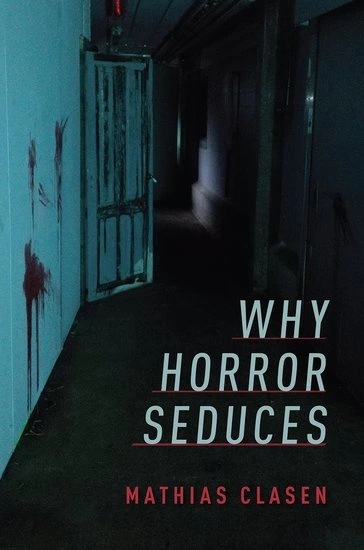
Oxford University Press · 2017
Why Horror
Seduces
How our evolutionary history and psychology help explain the stories, films, and monsters that frighten us.
Explore the book“the best work of non-fiction about the horror genre since Men, Women and Chainsaws”
“Impeccably well written and researched” — Choice
“a ground-breaking book” — Sean Moreland, Journal of the Fantastic in the Arts
“illuminating human nature and the nature of art” — Steven Pinker
“wonderfully exploratory and explanatory” — Peter Straub
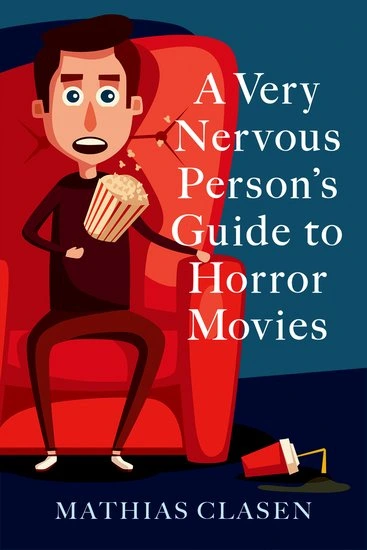
Oxford University Press · 2021
A Very Nervous Person’s Guide to Horror Movies
A research-based guide for curious but nervous viewers, exploring jump scares, nightmares, and the effects of horror cinema.
Explore the book“Mathias Clasen is like the Carl Sagan of horror … a kindred spirit and perfect guide to the terrifying world of attraction and repulsion.”
“witty, engaging, and informative” — Choice (Highly recommended)
“a comprehensive examination of the horror genre … Through his meticulous research and balanced, but persuasive perspective, Clasen invites the nervous reader to explore the multifaceted nature of the horror genre,” — Pete Turner, Projections
Other books
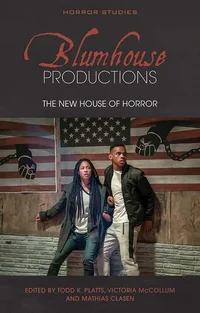
Co-editor · 2022 · English
Blumhouse Productions
The New House of Horror

Co-editor with Shiyi Yu · 2021 · Chinese
生物文化文学批评论集
A Collection of Articles in Bio-Cultural Literary Criticism
Co-editor · 2020 · English
Evolutionary Perspectives on Imaginative Culture
Co-editor · 2019 · Danish
Menneske, kultur, evolution
Et biokulturelt perspektiv
Author · 2012 · Danish
Monstre
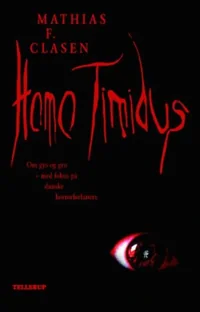
Author · 2004 · Danish
Homo Timidus

Author · 2002 · Danish
Drager, damer & dæmoner
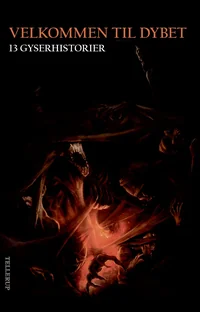
Editor · 2011 · Danish
Velkommen til dybet
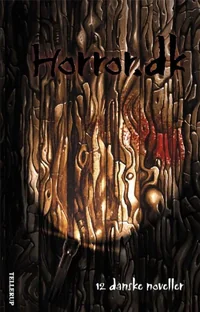
Editor · 2008 · Danish
Horror.dk
Media & contact
Let’s talk about fear
Selected media & writing
More media coverageWriting
The New York TimesDon’t Run From Fear — Embrace It
AeonFear not: Horror movies build community and emotional resilience
Psychology TodayWhy We Love Horror
Interviews & features
Talks.
I give talks on horror, recreational fear, and the power of stories—for academic and public audiences.
Keynotes · public lectures · panel conversations · English & Danish
Selected recent talks & conversations
Odense Film Festival
2026The Science of Horror
Festival talk
Simons Foundation, New York
2025Monsters, Memories and the Stories We Keep
Panel conversation
École Normale Supérieure
2025Horror, Fiction, and Fear
Invited lecture
HUSSE Conference
2025The New Science of Recreational Fear
Plenary talk
Norwegian University of Science and Technology
2024Why Horror Is Good For You
Invited lecture
For speaking invitations: mc@cc.au.dk
Topics I can discuss
Why we enjoy horror
The appeal of horror films, frightening stories, and haunted attractions; why people differ in their appetite for fear; and the balance between fear and enjoyment.
Stephen King & the art of storytelling
King’s enduring popularity, his characters and style, and the psychological mechanisms that make his fiction so absorbing.
Fear, horror & well-being
How frightening entertainment relates to emotion regulation, resilience, and well-being; its potential benefits for adults and children; and what the evidence can tell us about its limits.
Monsters, minds & culture
Why monsters and supernatural stories fascinate us, how horror draws on our psychology, and how the genre changes across cultural and historical contexts.
Representative publications